A prototype is the point at which an idea stops being theoretical and becomes something you can hold, test and make decisions from. We build prototypes at every stage of the development process, from rough appearance models produced quickly to test a form direction, through to fully functional pre-production prototypes that replicate the final product in material, finish and behaviour. The purpose of the prototype determines how it is built. A model made to test ergonomics needs to be the right size and weight. A model made for a board presentation needs to look like the finished product. A model made for engineering validation needs to perform like it too. We draw on the full range of in-house processes to build each prototype in the most appropriate way. CNC machining for precision geometry, 3D printing for complex forms, vacuum forming for thin-walled plastic shells, vacuum casting for short runs of identical parts, hand finishing for the surface quality that machines alone cannot achieve.


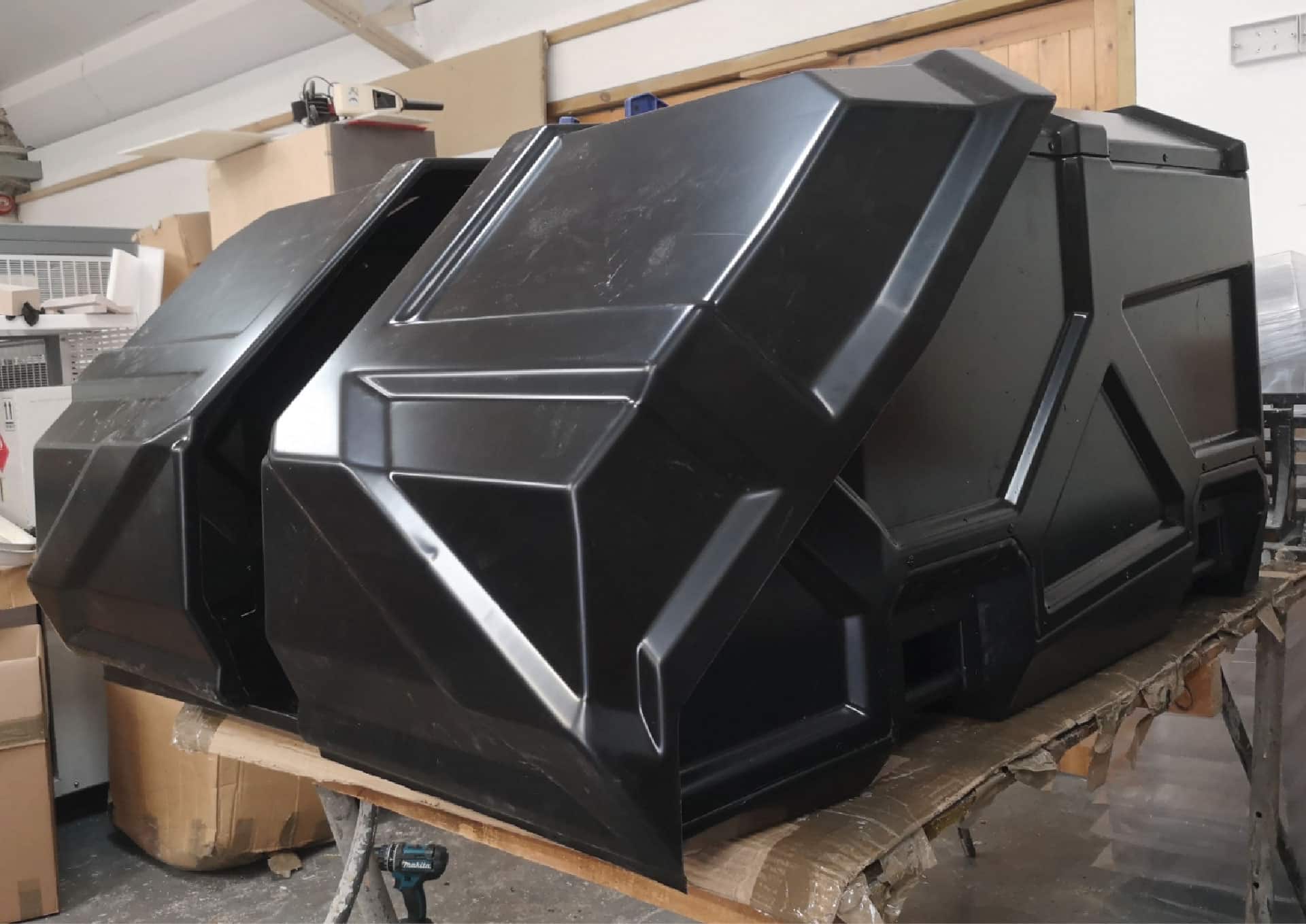

Types of Prototype We Build Appearance models for client presentations and photography. Ergonomic models for user testing and comfort assessment. Functional prototypes demonstrating moving parts, opening mechanisms or assembly sequences. Works-like models for engineering and performance testing. Pre-production prototypes for final sign-off before tooling is committed. We build single units and small sets, and we will advise on the right fidelity level for what you are trying to prove or present. Speed and Iteration Prototyping is an iterative process. The first version rarely stays unchanged, and it should not. We build prototypes to be assessed and improved, and we organise the process so that iterations are as fast and cost-effective as possible. Where a change only affects one component, we rebuild that component. Where a revision is fundamental, we tell you before you commit to the next round of build cost.